

Camel Facts
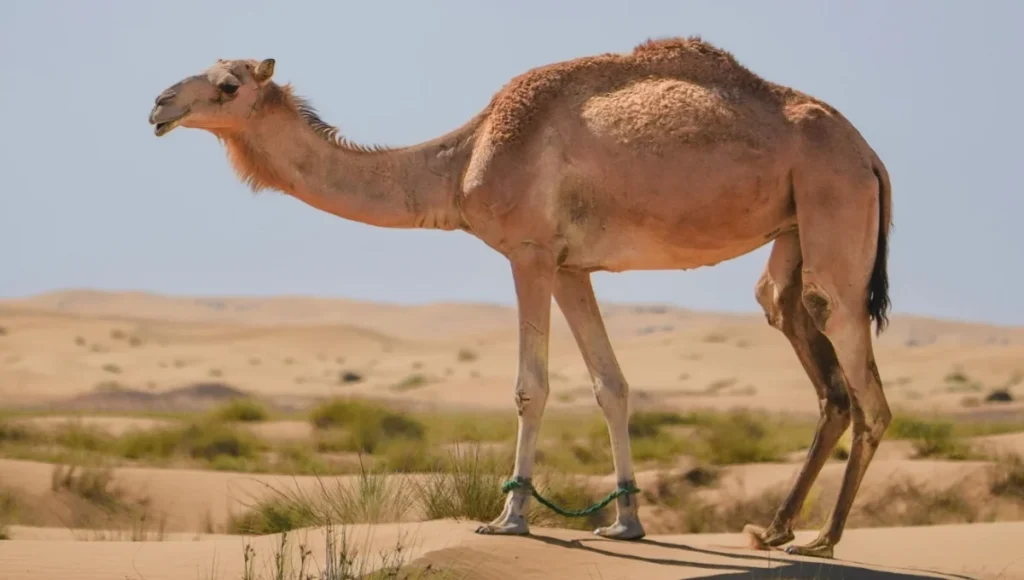
|
Scientific Name: |
Camelus |
|
Class: |
Mammalia |
|
Order: |
Artiodactyla |
|
Family: |
Camelidae |
|
Species: |
Camelus dromedarius (Dromedary) Camelus bactrianus (Bactrian) Camelus ferus (Wild Bactrian camel) |
|
Life Span: |
40–50 years |
|
Diet: |
Herbivore (grass, leaves, thorny desert plants) |
|
Size: |
Shoulder height: 1.8–2.3 m (6–7.5 ft) |
|
Weight: |
300–1,000 kg (660–2,200 lb) |
|
Speed: |
Up to 65 km/h (40 mph) |
|
Predators: |
Humans, wolves (young camels) |
|
Locations: |
Africa, Middle East, Central Asia, South Asia, Australia |
|
Habitat: |
Deserts, semi-arid regions, dry grasslands |
|
Population: |
~14 million worldwide (mostly domesticated) |
|
Gestation: |
About 13 months (390–410 days) |
Camel Facts:
- Camels use their humps as energy storage, helping them survive when food is limited in dry environments.
- They can go many days without water and quickly rehydrate by drinking large amounts in one go.
- Camels have special blood cells that keep flowing smoothly even when their bodies lose a lot of water.
- Their thick fur protects them from extreme heat, while also keeping them warm during cold desert nights.
- Wide, padded feet prevent camels from sinking into sand, making desert travel easier.
- Camels can close their nostrils and have long eyelashes, protecting their eyes and lungs during sandstorms.
Next to Giraffe Facts