

Giraffe Facts
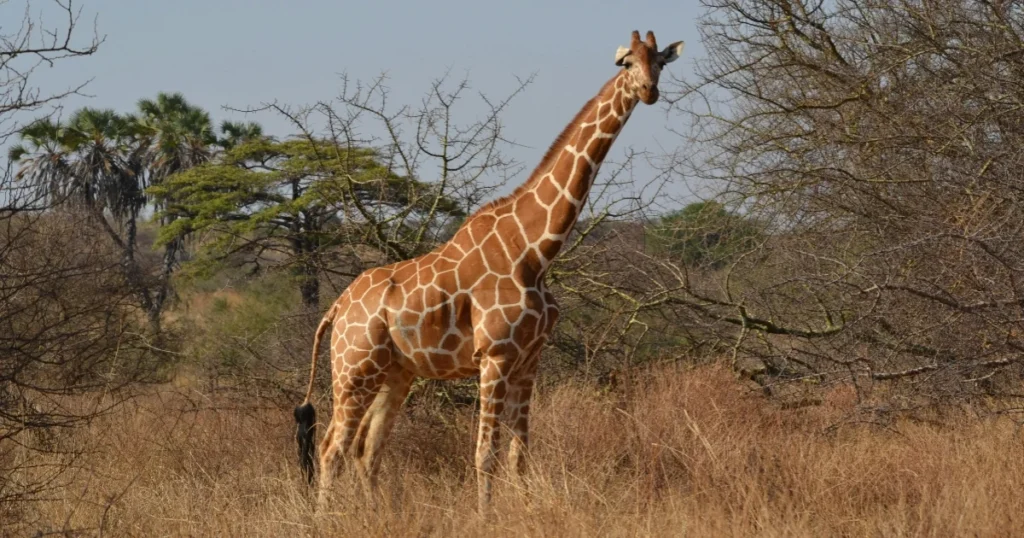
|
Scientific Name: |
Giraffa camelopardalis |
|
Class: |
Mammalia |
|
Order: |
Artiodactyla |
|
Family: |
Giraffidae |
|
Species: |
Giraffa camelopardalis |
|
Life Span: |
20–25 years in the wild |
|
Diet: |
Herbivore (leaves, shoots, flowers, mainly acacia trees) |
|
Size: |
Height: 14–19 feet (4.3–5.8 meters) |
|
Weight: |
1,600–3,000 pounds (725–1,360 kg) |
|
Speed: |
Up to 35 mph |
|
Predators: |
Lions, leopards, hyenas, and crocodiles (mostly attack calves) |
|
Locations: |
Sub-Saharan Africa |
|
Habitat: |
Savannas, grasslands, open woodlands, and lightly forested areas |
|
Population: |
Approximately 117,000 individuals in the wild |
|
Gestation: |
About 15 months (450 days) |
Giraffe Facts:
- Giraffes have only seven neck bones, the same number as humans, but each bone is much longer.
- A giraffe’s tongue can grow up to 45 cm (18 inches) and is dark in color to prevent sunburn.
- Giraffes sleep less than two hours per day, often taking short naps while standing.
- Their powerful legs can deliver strong kicks capable of defending against lions.
- Each giraffe has a unique pattern of spots, helping scientists identify individuals.
- Giraffes play an important role in their ecosystem by controlling tree growth and spreading seeds.
Next to Addax Facts