

Rhinoceros Facts
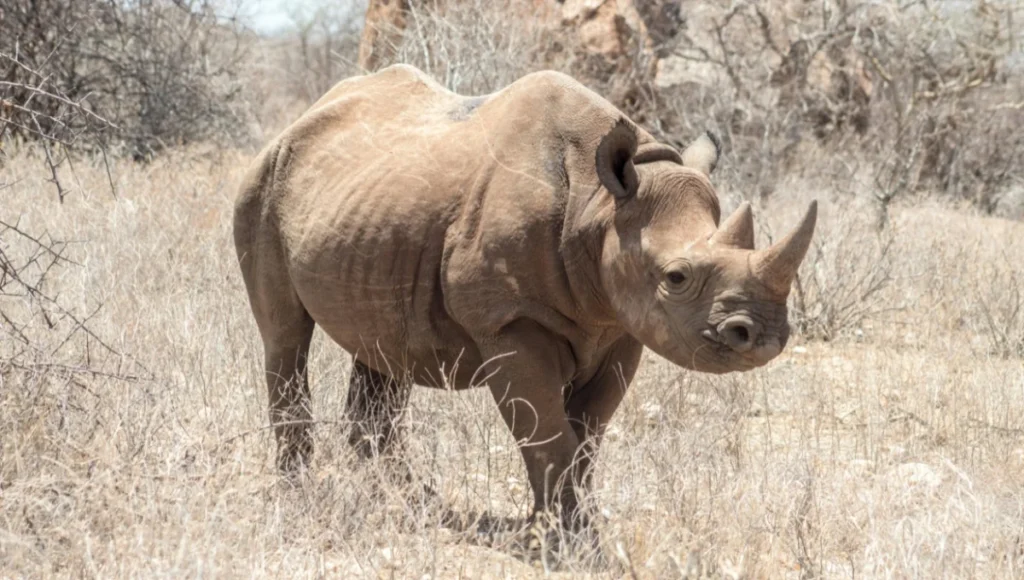
|
Scientific Name: |
Rhinocerotidae (family; varies by species) |
|
Class: |
Mammalia |
|
Order: |
Perissodactyla |
|
Family: |
Rhinocerotidae |
|
Species: |
5 species (White, Black, Indian, Javan, Sumatran) |
|
Life Span: |
35–50 years (up to 60 in captivity) |
|
Diet: |
Herbivore (grass, leaves, shoots, fruits) |
|
Size: |
3–4 m (10–13 ft) long |
|
Weight: |
800–2,500 kg |
|
Speed: |
Up to 55 km/h (34 mph) |
|
Predators: |
Humans (main threat), lions (calves) |
|
Locations: |
Africa & Asia |
|
Habitat: |
Grasslands, savannas, forests, wetlands |
|
Population: |
~27,000 worldwide |
|
Gestation: |
About 15–16 months |
Rhinoceros Facts:
- Rhinoceroses are large, strong mammals known for their thick skin and horns.
- Rhinos belong to the odd-toed ungulate group and are related to horses.
- A rhino’s horn is made of keratin, the same as human hair.
- They are mostly solitary and prefer living alone.
- Rhinos live in Africa and Asia in grasslands and forests.
- They are herbivores, eating grass, leaves, and plants.
- Rhinos can run up to 55 km/h despite their size.
- Their horn and thick skin help them stay safe.
- Most rhino species are endangered due to poaching.
Next to Monkey Facts