
The lion is one of the most famous wild animals in the world. Known as the King of the Jungle, lions are powerful big cats admired for their strength, courage, and social behavior. Unlike most cats, lions live in groups called prides, making them unique among felines.
Lions once roamed across Africa, Europe, and Asia, but today they are found mainly in parts of Africa, with a small population of Asiatic lions in India. Despite their reputation as apex predators, lions face many threats such as habitat loss, human conflict, and declining prey populations.
In this complete guide, you will learn everything about lions including their classification, appearance, habitat, diet, behavior, speed, reproduction, conservation status, and amazing facts.
Scientific Classification of Lion
| Category | Details |
|---|---|
| Kingdom | Animalia |
| Phylum | Chordata |
| Class | Mammalia |
| Order | Carnivora |
| Family | Felidae |
| Genus | Panthera |
| Species | Panthera leo |
What Is a Lion?
A lion is a large meat-eating mammal from the cat family. It is the second-largest big cat in the world after the tiger. Lions are famous for their muscular build, loud roar, and majestic appearance.
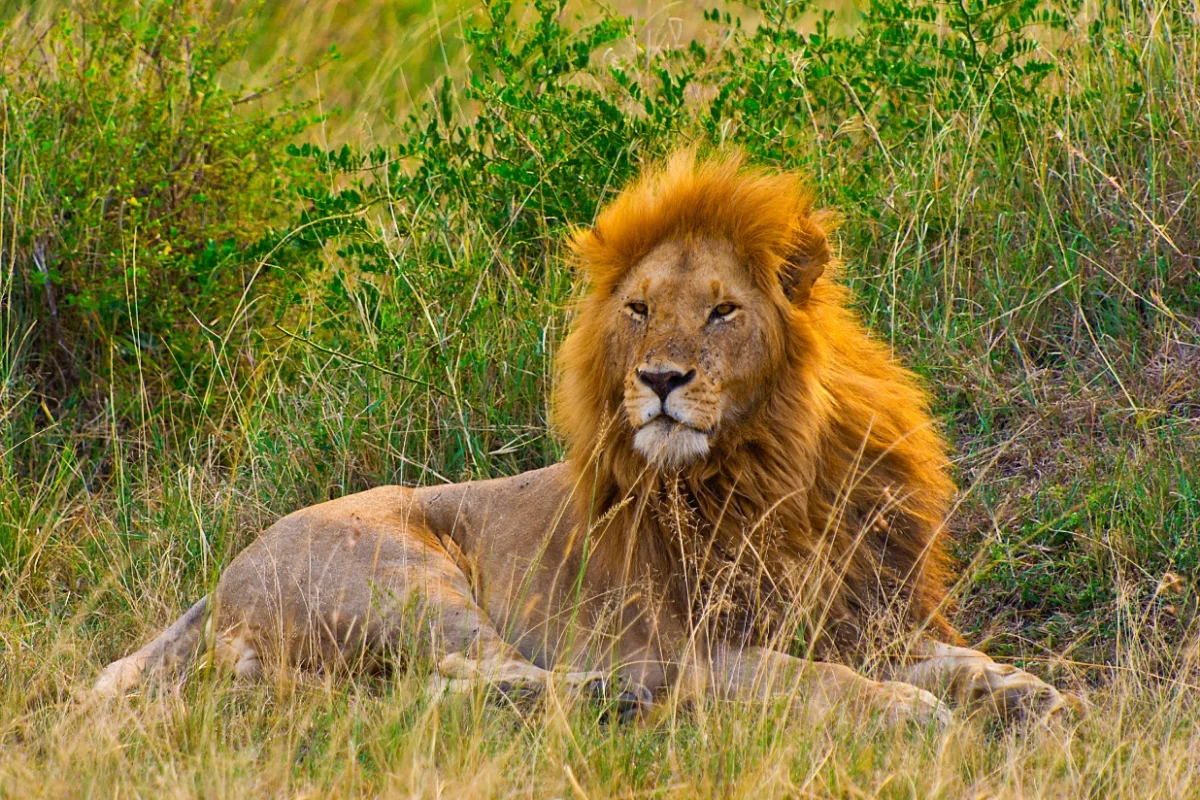
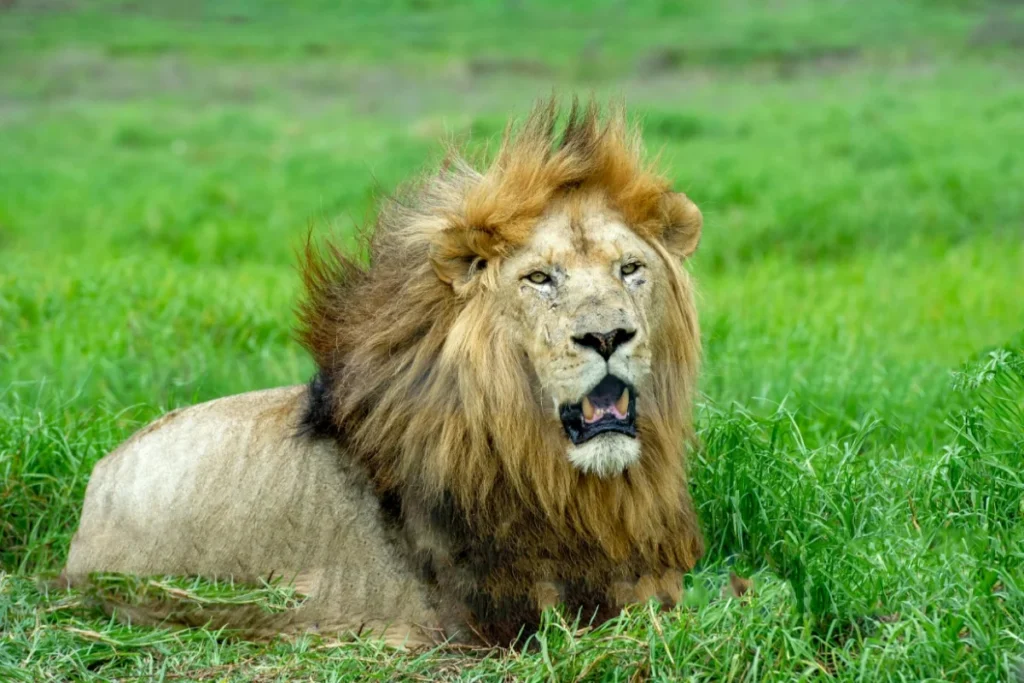
Male lions are recognized by their thick manes, while females are smaller and usually do the majority of hunting for the pride.
Lion Appearance
Lions have a strong and muscular body designed for hunting and survival.
Key Physical Features:
- Large head with powerful jaws
- Sharp retractable claws
- Golden, tan, or light brown fur
- Long tail with a black tuft at the end
- Males have a thick mane around the neck
- Strong legs built for sprinting and jumping
The mane of a male lion can vary in color from blonde to dark black depending on age, genetics, and environment.
Lion Size
Lions are among the largest cats alive today.
Average Body Length:
- Male Lion: 5.6 to 8.3 feet (1.7 to 2.5 m) excluding tail
- Female Lion: 4.6 to 5.7 feet (1.4 to 1.75 m)
Tail Length:
- 2.3 to 3.3 feet (70 to 100 cm)
Shoulder Height:
- Around 3.5 to 4 feet (1.1 to 1.2 m)
Lion Weight
Weight depends on age, sex, and habitat.
| Lion Type | Average Weight |
|---|---|
| Male Lion | 330 to 550 pounds (150 to 250 kg) |
| Female Lion | 260 to 400 pounds (120 to 182 kg) |
Some exceptionally large lions can weigh more.
Lion Habitat
Lions prefer open landscapes where they can hunt effectively.
Common Lion Habitats:
Lions commonly live in grasslands, savannas, open woodlands, scrublands, and semi-desert areas where they can hunt more effectively.
They avoid dense rainforests because visibility is poor for hunting.
Where Do Lions Live?
Today, wild lions are mostly found in sub-Saharan Africa.
Countries with Lion Populations:
- Tanzania
- Kenya
- Botswana
- South Africa
- Namibia
- Zambia
- Zimbabwe
A small population of Asiatic lions lives in Gir Forest National Park in India.
Lion Diet
Lions are carnivores, meaning they eat meat.
What Do Lions Eat?
Lions mainly eat large animals such as zebra, wildebeest, buffalo, antelope, and warthog. They may also hunt giraffe calves, smaller mammals, and sometimes feed on scavenged carcasses when hunting is difficult.
Lions can eat up to 15% of their body weight in one meal.
Hunting Behavior
Lionesses are the main hunters of the pride. They work together in teams to surround prey and launch coordinated attacks.
Hunting Strategy:
Lions hunt by quietly stalking their prey and carefully approaching close while using grass for cover. Once in range, they suddenly sprint forward, seize the prey with their claws, and usually kill it with a strong bite to the throat or nose.
Teamwork increases hunting success.
Lion Behavior
Lions are the most social members of the cat family in the world.
Pride Structure:
A lion pride may include 1 to 4 adult males, several related females, and cubs or juveniles living together as a social group.
Females usually stay in their birth pride for life, while males leave when older.
Why Lions Live in Groups:
- Better protection
- Cooperative hunting
- Cub care
- Territory defense
Lion Roar
A lion’s roar is one of the loudest and most powerful sounds in nature.
Facts About Lion Roars:
- Can be heard up to 5 miles (8 km) away
- Used to communicate with pride members
- Warns rival lions
- Helps maintain territory boundaries
Roaring usually happens at night or early morning.
Lion Speed
Lions are fast over short distances.
How Fast Can a Lion Run?
A lion can run at speeds of up to 50 mph (80 km/h) in short bursts, making it very fast over short distances.
However, lions cannot maintain this speed for long. They depend on surprise attacks instead of long chases.
Lion Strength
Lions are extremely powerful predators.
Strength Advantages:
Lions have many strength advantages, including a strong bite force, powerful forelimbs, the ability to drag heavy prey, and sharp claws for gripping and holding animals.
A group of lions can bring down prey much larger than themselves.
Reproduction and Life Cycle
Lions breed throughout the year, and a male and female may mate many times over several days. The gestation period is around 110 days. A lioness usually gives birth to 2 to 4 cubs per litter, and newborn cubs typically weigh between 2 to 4 pounds (1 to 2 kg).
Cubs are born blind and helpless.
Lion Cubs
Lion cubs are playful and depend on their mothers for survival.
Cub Facts:
- Eyes open after about one week
- Begin eating meat at around 3 months
- Weaned by 6 to 7 months
- Stay with mothers for protection
Many lion cubs do not survive because of predators or starvation.
Lifespan of Lions
| Environment | Average Lifespan |
|---|---|
| Wild | 10 to 14 years |
| Captivity | Up to 20 years or more |
Male lions often live shorter lives in the wild due to fighting.
Lion Predators and Threats
Adult lions have few natural predators, but cubs are vulnerable.
Threats to Cubs:
Lion cubs face many dangers, including attacks from hyenas, leopards, crocodiles, and male lions from rival prides.
Threats to Adult Lions:
Adult lions face several major threats, including humans, habitat destruction, poisoning, trophy hunting, disease, and declining prey populations.
Lion Conservation Status
According to the IUCN, lions are classified as Vulnerable.
Why Lion Numbers Are Declining:
- Loss of habitat
- Conflict with farmers
- Illegal wildlife trade
- Reduced prey animals
Conservation programs focus on habitat protection and reducing conflict with humans.
African Lion vs Asiatic Lion
| Feature | African Lion | Asiatic Lion |
|---|---|---|
| Range | Africa | India |
| Size | Larger | Slightly smaller |
| Mane | Fuller | Less developed |
| Belly Fold | Less obvious | More visible |
| Population | Larger | Much smaller |
Why Is the Lion Called King of the Jungle?
Although lions mainly live in grasslands, they earned this title because of:
- Majestic appearance
- Powerful roar
- Fearless nature
- Dominant position in the food chain
- Cultural symbolism of royalty and bravery
Lion in Culture and History
Lions have appeared in myths, flags, and stories for centuries.
Examples:
Lions have appeared in many cultural symbols and artworks, including royal emblems, ancient sculptures, sports team logos, as well as movies and books.
They symbolize courage, leadership, and strength.
Interesting Facts About Lions
- Lions are the only truly social big cats.
- A lion’s roar can travel miles.
- Lionesses do most hunting.
- Cubs often play-fight to build skills.
- Lions can sleep for up to 20 hours a day.
- Male lions defend territory.
- Lions can leap over 30 feet.
- White lions exist due to rare genetics.
- Asiatic lions survive mainly in India.
- Lions groom each other to strengthen bonds.
Are Lions Dangerous to Humans?
Lions are wild predators and can be dangerous, especially if threatened, injured, or accustomed to human presence. Attacks are rare but possible. People should never approach wild lions.
Can Lions Be Pets?
No. Lions are wild animals with powerful instincts and specialized needs. Keeping lions as pets is dangerous and often illegal in many places.
Role of Lions in the Ecosystem
Lions help maintain balance in nature by controlling herbivore populations. This prevents overgrazing and supports healthier ecosystems.
Without lions, prey numbers can rise too high and damage habitats.
Frequently Asked Questions
What do lions eat?
Lions eat animals such as zebra, buffalo, antelope, and wildebeest.
How fast can lions run?
They can run up to 50 mph (80 km/h) for short distances.
Where do lions live?
Mostly in Africa, with Asiatic lions in India.
How long do lions live?
10–14 years in the wild and up to 20+ years in captivity.
Are lions endangered?
They are listed as Vulnerable, meaning populations are declining.