
Scientific Classification
Common Name: African Wild Dog
Scientific Name: Lycaon pictus
Kingdom: Animalia
Phylum: Chordata
Class: Mammalia
Order: Carnivora
Family: Canidae
Description
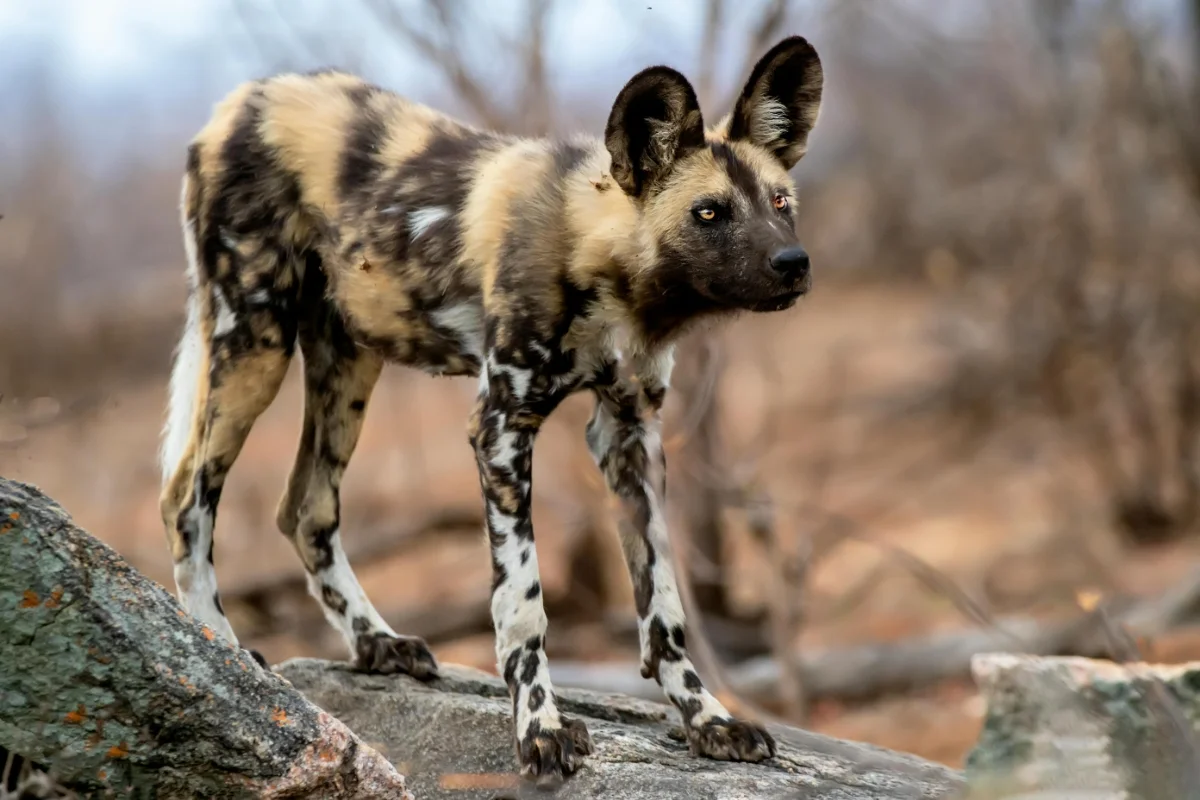
The African wild dog is a rare and highly social predator known for teamwork, speed, and colorful fur. It is also called the painted dog.
Appearance
It has a slim body, long legs, large round ears, and a patchy coat of black, brown, white, and yellow. Every dog has a unique pattern.
Size & Weight
Adults are about 75 to 110 cm long and weigh 18 to 36 kg.
Range & Habitat
They live in sub-Saharan Africa, mainly in savannas, grasslands, and open woodlands.
Behavior
African wild dogs live in packs and work together to hunt, protect pups, and share food.
Diet
They mainly eat antelope, gazelles, hares, and other small mammals.
Hunting Skills
They are excellent hunters and use teamwork, speed, and stamina to chase prey over long distances.
Adaptations
They have long legs for running, large ears for cooling, and strong pack communication.
Predators & Threats
Lions are their main natural enemy. Human threats include habitat loss, disease, and road accidents.
Reproduction & Pups
The dominant female gives birth in a den after about 70 days. Litters usually have 6 to 12 pups.
Life Span
They live around 10 to 12 years in the wild.
Conservation Status
The African wild dog is Endangered.
Population Trend
Their population is decreasing, with only a few thousand left in the wild.
Interesting Facts
- African wild dogs are also called painted dogs because of their colorful coats.
- No two individuals have the same fur pattern.
- They can run at speeds of around 60 km/h.
- Their hunting success rate is one of the highest among predators.
- Pack members care for sick or injured dogs.
- They greet each other with playful excitement before hunts.
- African wild dogs regurgitate food for pups and weaker pack members.