
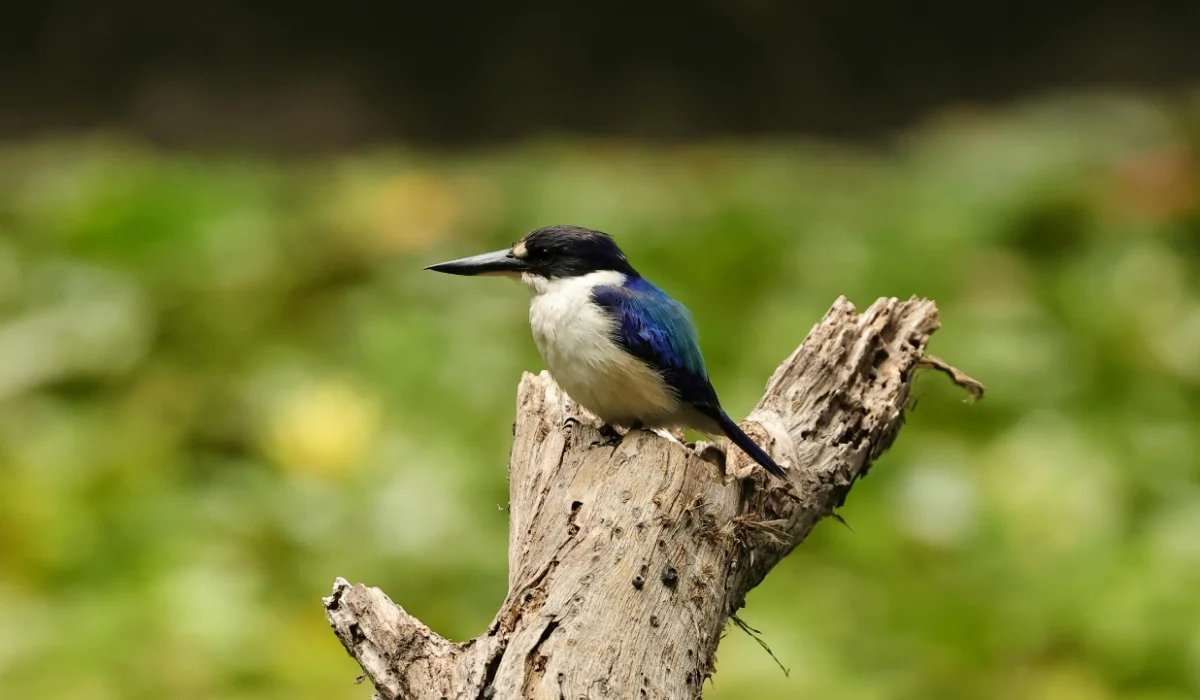
The Forest Kingfisher is a small but eye-catching bird known for its bright blue feathers, clean white underparts, and sharp hunting skills. Even though it is not as famous as some other kingfisher species, this bird is a true gem of the forest edges and open woodlands. With its colorful look and quick movements, the Forest Kingfisher often surprises birdwatchers lucky enough to spot one.
A Stunning Splash of Color
One of the first things people notice about the Forest Kingfisher is its beautiful coloring. Its back, wings, and tail shine in rich shades of turquoise-blue, while the chest and belly stay white or pale. It also has a dark stripe through the eye, giving it a bold and alert expression.
This mix of bright colors helps the bird stand out while still blending with patches of sky, water, and leaves.
Where It Lives
The Forest Kingfisher is commonly found in northern and eastern parts of Australia, as well as nearby islands. It prefers open forests, mangroves, farmland edges, gardens, and woodland areas rather than deep dense forests.
Unlike many kingfishers that stay close to rivers, this species is comfortable living away from water too.
A Skilled Hunter
Even without spending all its time near water, the Forest Kingfisher is an excellent hunter. It usually sits quietly on a branch or wire, watching the ground below. Once it spots movement, it quickly dives down to catch prey.
Its diet includes:
- Insects
- Small lizards
- Spiders
- Worms
- Occasionally tiny frogs
This hunting style requires patience, speed, and sharp eyesight.
Voice and Behavior
The Forest Kingfisher is often heard before it is seen. It has a loud, sharp call that echoes through the trees. During breeding season, pairs may call to each other and defend their territory.
These birds are usually seen alone or in pairs. They spend much of the day perched calmly, suddenly bursting into action when food appears.
Nesting and Family Life
During breeding season, Forest Kingfishers nest inside holes in trees or termite mounds. The female lays eggs inside the safe cavity, and both parents help care for the chicks.
Once the babies hatch, the parents work hard bringing insects and other small prey until the young birds are ready to fly.
Why People Love This Bird
The Forest Kingfisher may be small, but it leaves a big impression. Its bright colors, confident nature, and fast hunting dives make it exciting to watch. Bird lovers especially enjoy seeing one sitting proudly on a branch like a tiny ruler of the woodland.