
The fallow deer is one of the most beautiful and easily recognized deer species in the world. With its spotted coat, wide antlers, and calm nature, this deer often catches attention wherever it lives. Many people admire fallow deer for their elegant appearance and peaceful behavior.
Originally native to parts of Europe and western Asia, fallow deer have now been introduced to many countries around the world. They are commonly found in parks, forests, open grasslands, and estates where they can roam freely.
What Does a Fallow Deer Look Like?
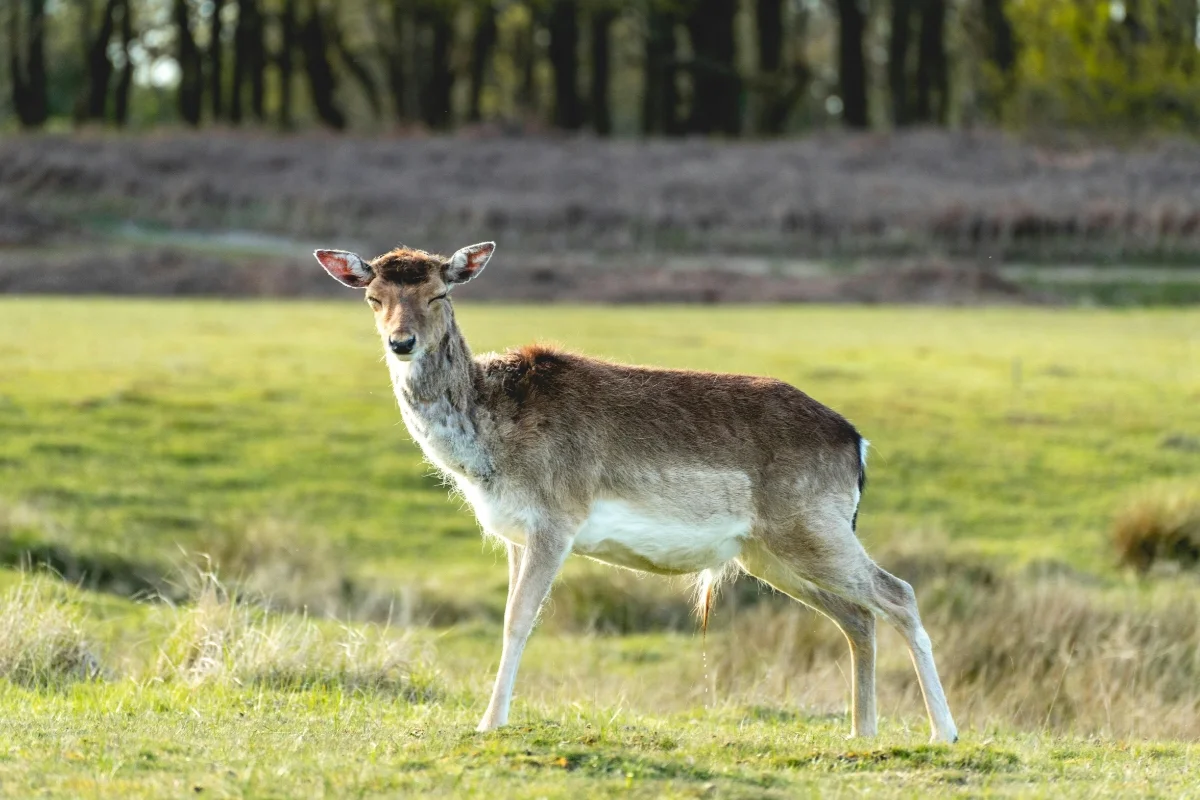
Fallow deer are medium-sized deer with a slim body, long legs, and a graceful walking style. Their coat color can vary a lot. Some are light brown with white spots, while others may be dark brown, black, or even almost white.
Male fallow deer, called bucks, are especially known for their large palm-shaped antlers. These broad antlers look different from the pointed antlers of many other deer species.
Females, called does, do not grow antlers and are usually smaller than males.
Size and Weight
An adult fallow deer usually stands around 85 to 95 cm tall at the shoulder. Their body length can reach 1.3 to 1.7 meters.
Males are much heavier and can weigh between 60 to 100 kg, while females are lighter and usually weigh around 30 to 50 kg.
Where Do Fallow Deer Live?
Fallow deer prefer woodlands mixed with open grassy spaces. This habitat gives them shelter in forests and room to graze in open areas.
They are commonly found in countries across Europe and have also been introduced to places such as Australia, New Zealand, South Africa, and parts of North America.
What Do Fallow Deer Eat?
Fallow deer are herbivores, which means they only eat plants. Their diet includes grass, leaves, shoots, herbs, bark, fruits, and nuts.
They often graze in the early morning or evening when temperatures are cooler and the surroundings are quieter.
Behavior and Lifestyle
Fallow deer are social animals and often live in groups. Females usually stay together with young deer, while males may form separate groups outside the breeding season.
They are alert, fast runners, and can leap quickly when danger appears. Even though they seem calm, they can move very fast when needed.
Breeding Season
The breeding season of fallow deer is called the rut and usually happens in autumn. During this time, bucks compete for females by showing strength, making loud groaning calls, and defending territories.
After a pregnancy of around 230 days, a female usually gives birth to one fawn in spring.
Life Span
Fallow deer can live around 12 to 16 years in the wild. In protected environments, some may live longer.
Interesting Facts About Fallow Deer
- Fallow deer can have several coat colors, which is unusual among deer species.
- Male fallow deer grow broad antlers instead of narrow pointed ones.
- They are excellent jumpers and runners.
- Baby deer are called fawns.
- Their white-spotted coat helps them blend into sunlight and shadows.
- Fallow deer have been introduced to many countries outside their native range.
Conservation Status
Fallow deer are not currently considered endangered. In many areas, their population is stable or growing. Some places even manage their numbers to protect local habitats.